
Botox for Headaches: How It Works, Benefits & Results Explained
- Home
- Botox for Headaches: How It Works, Benefits & Results Explained
Living with headaches most days of the month can gradually change daily life. Meetings, family plans, and even quick trips to the mall start to center around the fear that the pain might come back. The bag is always ready with tablets, water, and sunglasses, along with quiet hope that today will be different. There’s a smile for the camera, then a dark room at home once the tension hits. So when someone mentions Botox for headaches, it might sound strange or even concerning at first, but if pain begins to control most decisions, it’s natural to wonder if this treatment could help restore more normal days instead of just relying on stronger medicine.
Botox is a purified protein that calms overactive nerve signals. In beauty clinics, it smooths lines by relaxing small muscles under the skin. In medical settings, doctors use Botox injections for chronic migraine in a very structured way. Tiny doses are injected into the muscles of the head and neck that connect to pain pathways. Over time, this can reduce how often migraine attacks start and how strong they feel. You still have a sensitive brain, but the volume on the pain signals is turned down.
Most specialists offer this treatment to adults with chronic migraine. That usually means at least fifteen headache days a month, with several that last four hours or longer. Often, people at this stage have already tried other preventive medicines, lifestyle changes, or nerve blocks. If those have not helped enough, your neurologist might discuss Botox injections for migraine as the next step. It is not a quick fix for the occasional bad headache. It is a long term plan for people whose pain feels like a constant part of daily life.
What happens during a treatment visit?
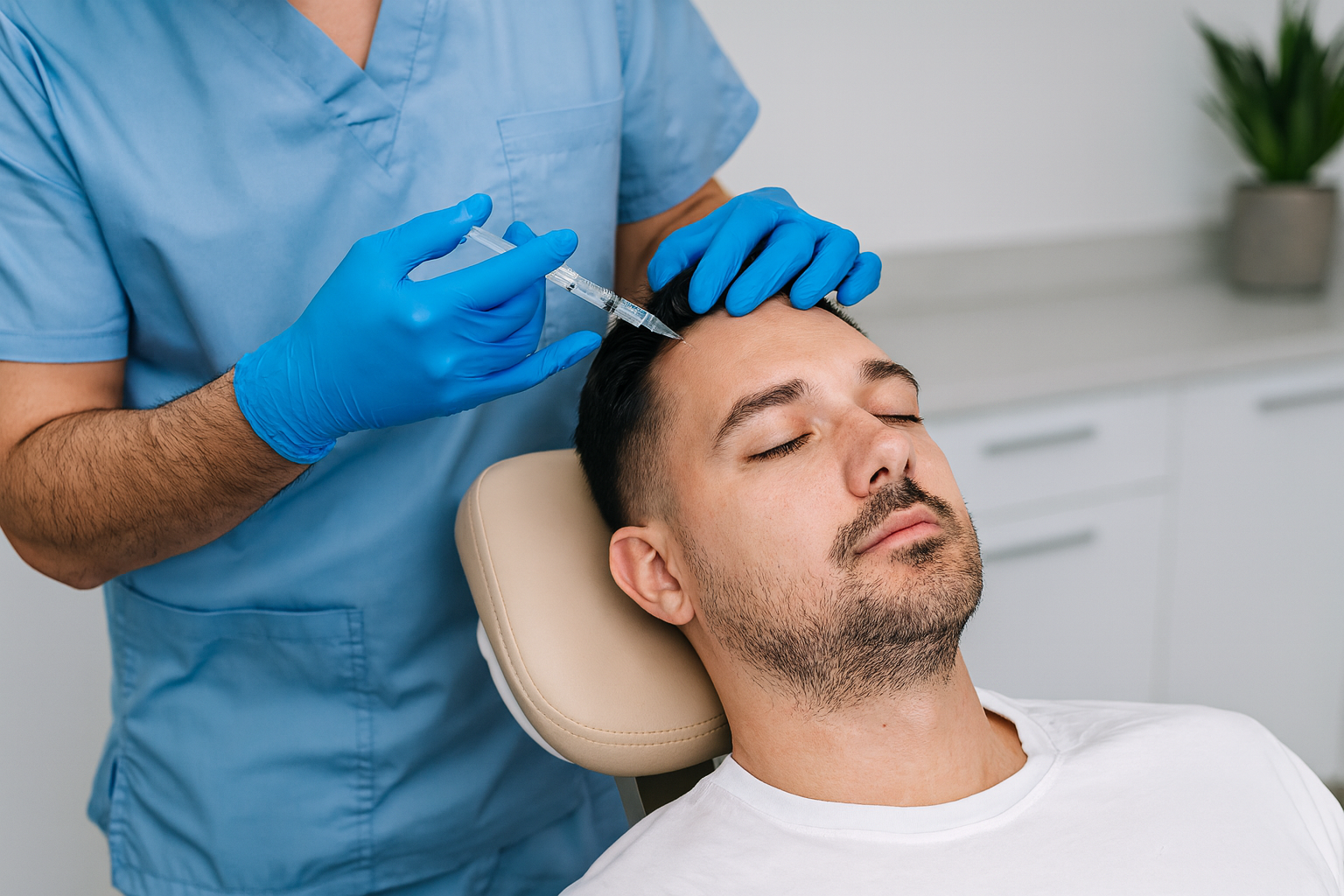
The first appointment often feels tense simply because it is unfamiliar. The actual process is usually short and very organized. Your doctor reviews your history, listens to how headaches affect your work and home life, and may look at any diary you keep. After that, they clean the skin on your forehead, temples, back of the head, and neck. Using a very fine needle, they place small injections at several points across those areas.
Each injection feels like a quick sting rather than a deep jab. The full pattern uses many small doses instead of one big one. The aim is to gently quieten pain pathways in several muscles instead of freezing your whole face. Most people are surprised at how fast the visit is; once preparation is done, the injections themselves may take only ten to fifteen minutes.
Headache after Botox: what to expect in the early days
It can feel frustrating to walk out of the clinic and then notice a strong headache after Botox. This early reaction usually comes from sore injection spots and from scalp and neck muscles adjusting to a different level of tension. For some people, that change triggers a brief spike in pain or a short flare of their usual migraine pattern.
Most of the time, this kind of early headache fades within a week or two. Cool packs, gentle neck stretches can be done if approved by the doctor, and usual rescue medicine can make this phase easier to manage. It helps to note when the pain started, how long it lasted, and what provided relief. so the specialist can decide whether to adjust injection points or doses in future sessions.
Botox for Tension Headaches
Tension-type headaches often feel like a tight band across the forehead or a heavy weight on the back of the head. Long desk days, stress, eye strain, and stiff neck muscles all add to the pressure. Many people say their shoulders never truly relax, even when they lie down. When this kind of pain becomes frequent, some specialists may suggest Botox for tension headaches as one part of a broader management plan.
This treatment aims to relax overworked muscles and reduce trigger points in the neck, shoulders, and scalp. During an assessment, the doctor presses along these areas to find the most tender spots. Based on that map, an injection pattern is designed that fits the patient’s body, often including points in the forehead, temples, back of the head, and along the neck and upper shoulders where muscles feel especially tight.
Botox for cluster headaches
Cluster headaches are very different from tension pain or classic migraines. Attacks often start suddenly, hit one side of the head, and center around or behind one eye. The eye can water, the nose on that side may run, and the pain can feel burning or stabbing. Many people feel restless during attacks, unable to lie still. Sleep is often disrupted, and fear of the next episode can make daily life feel very small.
Standard care for this condition involves fast-acting medication to stop attacks and preventive treatments to decrease the frequency of clusters. Botox for cluster headaches is typically not the first option. It may be considered when other treatments are not effective enough or when side effects limit safe use of other options. In such cases, a neurologist might include this as one more tool in a broader treatment approach.
How well does treatment work over time?
When people talk about their results, it can sometimes sound like they went from nonstop pain to almost no headaches overnight. In real life, the changes are usually more gradual. The focus of this treatment is to lower the number of headache days and reduce how intense each one feels. Many people with chronic migraines begin to see noticeable improvement in both areas after a few treatment sessions.
You might move from twenty or more headache days a month to ten or twelve. That is still a lot to carry, but it opens space to plan work, social events, and rest with less fear. Some people notice that even When they do experience a Botox headache, it passes more quickly and responds better to their usual rescue medicines. Others can reduce how often they reach for pain pills.
Doctors usually suggest looking at results after at least two or three treatment cycles, spaced twelve weeks apart. If your diary shows no meaningful shift in frequency or intensity, it may be time to rethink the plan. If numbers and daily life both look better, you and your specialist can decide how long to continue and how to combine this approach with other tools.
Botox for headaches side effects
Every medical treatment comes with some level of risk, and this one is no different. The most common reactions are mild and short-lived. You may notice slight redness or bruising at the injection site, a heavy or tight feeling in the forehead, or some neck soreness. A small number of people experience a temporary droop in one eyelid or eyebrow as the muscles settle.
Some side effects from Botox for headaches are related to short-term muscle weakness. People who spend long hours at a desk may find it harder to maintain good posture, and neck muscles may feel tired more quickly. Taking short breaks to move around, doing doctor-approved stretches, and using supportive seating can help make this adjustment period easier.
Serious side effects are rare but important to understand. If the toxin spreads beyond the intended area, it can affect the muscles involved in swallowing or breathing. Warning signs include increasing weakness that spreads, trouble speaking clearly, or new difficulty taking a breath. Anyone who experiences these symptoms should seek emergency medical help right away and notify their specialist as soon as possible.
Read More: How Botox Helps Migraines
Cost for Botox for migraines
The cost of Botox for migraines is an important factor in any decision because this is a repeated treatment, not a one-time visit. Sessions typically occur every twelve weeks, so the total amount paid over a year can be significant. Understanding what’s included in that number helps you consider it thoughtfully instead of with fear.
In simple terms, you are paying for the medication itself, the specialist’s expertise, and the clinic’s resources such as nurses, rooms, and equipment. The exact cost varies depending on how many units are used, which type of clinic you visit, and whether your insurance or health system covers part of the bill for chronic migraine treatment.
Before starting treatment, request a detailed quote in writing and ensure you understand the total cost for Botox for migraines over a full year, not just a single session. Confirm how many units are included, whether review visits are billed separately, and what happens if the dose needs adjustment. This helps you compare the overall expense to what you may already be losing in missed work, canceled plans, and ongoing spending on rescue medication.
How to prepare and track your results
Good preparation makes treatment feel less overwhelming. Before your first session, keep a simple diary for at least a month. Note when headaches happen, how strong they feel, what you were doing, and which medicine you took. Bring this record to your specialist. It helps them see your true pattern instead of relying on memory alone.
Continue using the diary after injections. Note any headaches that occur early after treatment, any soreness in your neck, and any instances in which you require rescue medication. Keep track of the number of days affected, the duration of attacks, and the effectiveness of your medication during the entire 12-week period. Instead of speculating when you return for the next round, you and your doctor can compare months side by side.
Also look at life beyond numbers. Are you cancelling fewer plans? Are you able to show up at work or with family more often, even if pain is still present sometimes? Do you feel less dread when you think about the next month? These softer signs matter just as much as the raw count of attacks when you judge whether this path is helping.
FAQs
Does Botox really help headaches?
Yes, for many people with chronic migraine, botox for headaches can reduce how often attacks happen and how strong they feel, but it is not a complete cure.
What is the 4 hour rule for Botox?
For the first four hours after treatment, remain upright, avoid rubbing the injected areas, and skip heavy exercise so the medicine stays where it was placed.
Where do you inject Botox for tension headaches?
With botox for tension headaches, doctors usually inject the forehead, temples, back of the head, and tight neck or shoulder muscles based on your pain pattern.
Can tension headaches cause dizziness?
They may cause a mild feeling of being off balance or a heavy sensation, but any sudden or severe dizziness should always be checked by a doctor.
