
Botox for Sweating Face: How It Works, Benefits & Results
- Home
- Botox for Sweating Face: How It Works, Benefits & Results
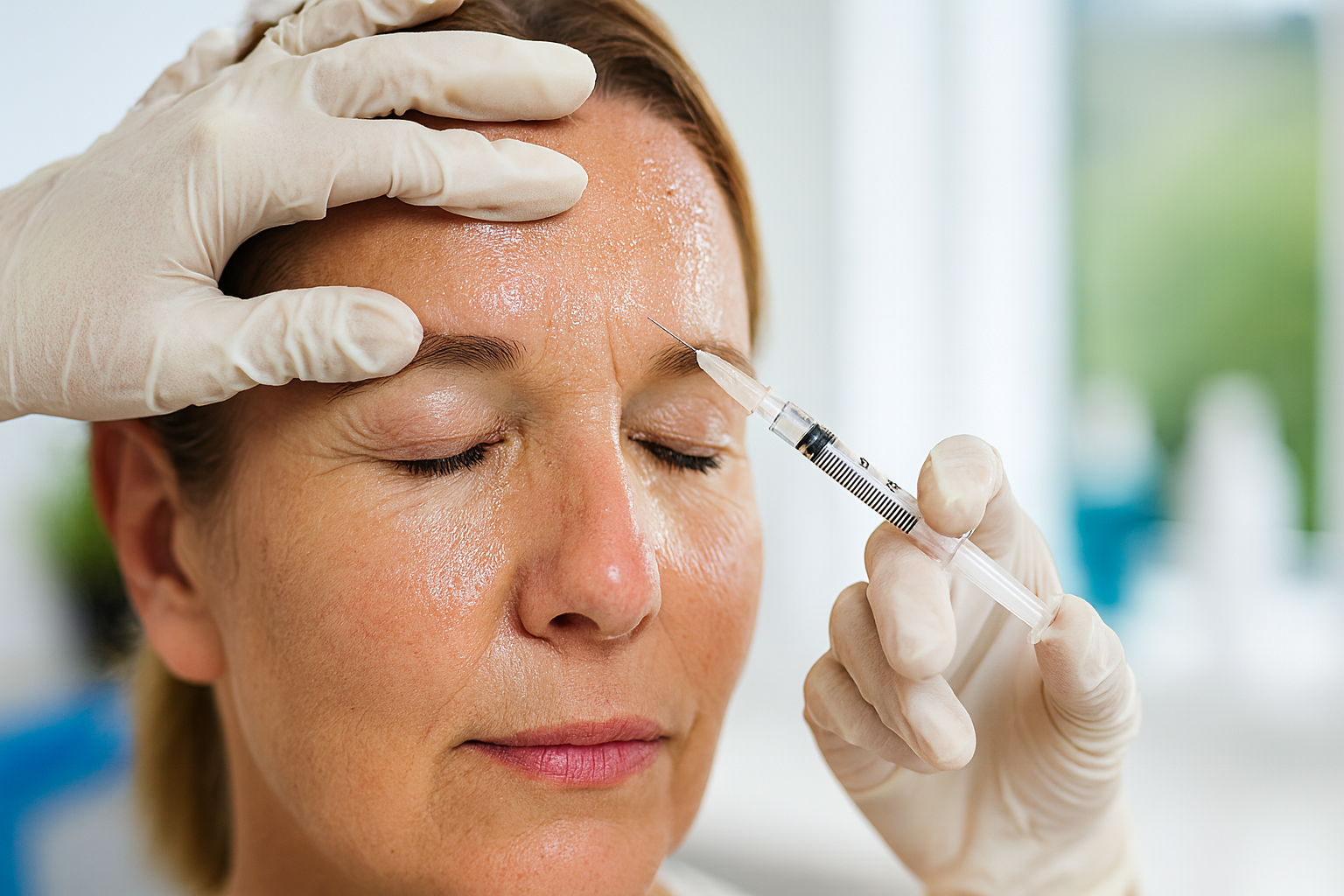
Some days your skin feels calm and balanced, and on other days it behaves as if it has a mind of its own. You walk out looking fresh, your makeup holds beautifully, everything seems settled, and then a thin layer of moisture forms across your forehead or upper lip without any warning. It becomes upsetting when the weather is normal, your nerves are steady, and yet your face keeps getting damp for no clear reason.
Many people go through this in silence, assuming it is typical sweating, but persistent shine, melting makeup, and damp patches can quietly affect confidence and comfort. This is where Botox for a sweating face can make a noticeable difference. It works as a supportive option that helps reduce unnecessary sweat activity, rather than letting overactive glands control your day. Individuals dealing with facial hyperhidrosis often find that Botox for face sweating creates a steady, manageable level of dryness that feels natural and refreshing. Techniques such as Botox for hyperhidrosis offer relief when simple skincare or lifestyle adjustments are no longer enough. Whether you are exploring Botox for hyperhidrosis, comparing it with hyperhidrosis medication, or looking into alternatives to cosmetic treatments, the real aim remains simple: feeling comfortable, clean, and confident without constantly managing unwanted moisture.
What is facial hyperhidrosis really like?
Hyperhidrosis means sweating more than your body needs for temperature control. When it shows up mainly on the face and scalp, doctors often call it craniofacial hyperhidrosis. In simple words, the sweat glands on your head act like someone has turned the dial to “max” and left it there.
You might notice:
- Beads of sweat appear on your forehead in calm situations
- Your upper lip gets wet the moment you feel even a little nervous
- Hair along the hairline is always feeling damp
- Makeup breaking apart or sliding off within an hour
This is not the same as normal sweating during a workout. With facial hyperhidrosis, the sweat can show up during a video call, while you are driving, or even when you are just standing in a shop. It is not just uncomfortable. It can also hit your confidence, your social life, and even your work performance.
Hyperhidrosis can be primary, which means it is not caused by another disease and often runs in families, or secondary, which means it is linked with something else going on in the body, such as thyroid issues, hormone changes, infections, or certain medicines. Before offering botox for hyperhidrosis on the face, a good doctor will usually ask questions, check your health history, and sometimes run simple tests to rule out secondary causes.
How Botox helps with face sweating
To understand how Botox for face sweating works, it helps to picture the messaging system inside your skin. Nerves send tiny chemical signals to sweat glands telling them, “Start sweating now.” In people with facial hyperhidrosis, those signals are much stronger than they need to be.
Botox is a purified protein that temporarily blocks specific signals. During a hyperhidrosis Botox treatment, very small amounts are injected just beneath the skin in the areas with excessive sweating. The product stays near the sweat glands and interrupts the nerve messages. The glands themselves are not removed, but they become less active and produce significantly less sweat in that area.
A few important points:
- Botox is officially approved in many places for severe underarm sweating, but doctors often use Botox for hyperhidrosis in other areas, like the face, hands, and feet, as an off-label medical use.
- The face has many small muscles that control expressions. That is why the injector has to understand both cosmetic botox for wrinkles and medical hyperhidrosis botox, so they can reduce sweat without freezing your natural expressions.
- The same product used to smooth lines can be placed in a different pattern when the goal is sweat control instead of wrinkle control.
When it is done well, Botox for a sweaty face gives targeted relief. Your body still sweats in other places to cool you, but the areas that used to embarrass you the most stay much drier.
What the treatment visit usually looks like
Every clinic has its own style, but most appointments for botox for face sweating follow a similar flow.
Step 1: Consultation and planning
First, you sit down with the doctor or injector and talk through:
- Where you sweat the most on your face or scalp
- How long you have had the problem
- What you have already tried, like strong antiperspirants or medicines
- Your general health and any regular tablets or conditions
Sometimes the provider will ask you to point out your worst zones in a mirror. Together, you plan which parts will get hyperhidrosis Botox. Common spots include the central forehead, hairline, upper lip, and sometimes the nose or temples.
Step 2: Numbing and prep
Facial skin can be sensitive, so many clinics try to keep things comfortable by:
- Applying numbing cream for a short time before injections
- Using ice packs briefly on the area
- Cleaning the skin with a gentle antiseptic
Step 3: Injections
When it is time for the actual injections:
- The provider uses a very fine needle
- Tiny drops of product are placed in a grid like pattern over the sweaty area
- Each pinch is quick, and the entire process often takes 10 to 30 minutes
If you have tried cosmetic injections in the past, the sensation is quite similar. The difference is that the injection pattern is usually broader because the goal here is to target sweat glands instead of focusing on only one or two specific muscles.
Step 4: Aftercare and the first days
Right after Botox for face sweating, you may notice:
- Small bumps like mosquito bites where the needle went in
- Mild redness or tenderness in some spots
These usually settle within a few hours. Most people can go straight back to normal life, work, or errands. Your provider may ask you not to rub or massage the treated zones for the rest of the day and to avoid lying flat for a short time. There is usually no need for bandages or heavy aftercare.
When will you see results and how long do they last?
Botox needs a little time to do its job. You will not walk out of the clinic completely dry. The usual timeline looks like this:
- The first improvement appears in around 3 to 7 days
- Full effect shows by about 2 weeks
- Results can last around 4 to 6 months, sometimes longer, before sweat slowly returns
These time frames are similar for underarm and facial treatments. Once the effect wears off, the nerves start sending full strength signals again. At that point, some people choose another round of hyperhidrosis Botox and treat it like a regular part of their self care, just as they might do with repeating Botox for wrinkles a few times a year.
Real life benefits you can feel
The biggest changes from botox for a sweating face often show up in small daily moments rather than dramatic before and after pictures.
Makeup stays where you put it
If you enjoy makeup, heavy sweating on the face can make you feel like nothing works. After botox for face sweating, many people find that:
- Foundation holds better, even under lights or during long days
- Concealer does not break up as quickly around the nose and upper lip
- You can wear the finishes you like instead of always choosing full matte formulas just to fight sweat
This does not mean your skin will never shine again, but it usually brings the situation down from constant struggle to normal touch ups.
Social and work situations feel lighter
Facial hyperhidrosis is not only about comfort. It is also about how you feel in front of other people. With less sweating after botox for hyperhidrosis on the face, many people say they:
- Stop checking their reflection every few minutes
- Feel more relaxed in meetings, presentations, and dates
- Notice a quiet boost in confidence because they are no longer fighting their own skin
That mental shift can be just as valuable as the physical dryness.
Targeted treatment instead of full body changes
Compared with oral treatments that affect sweat glands throughout the entire body, injections target only the specific areas that need help. This offers a few clear advantages:
- The treated spots produce far less sweat
- The rest of your body continues to cool itself normally
- You avoid side effects that some tablets can cause, such as dry mouth, constipation, or blurred vision
In certain cases, doctors may pair a low dose of oral medicine with local injections for people who experience sweating in many areas. This approach is tailored to your overall health, lifestyle, and how widespread the sweating is.
Risks and the most delicate areas for Botox
No medical treatment is completely risk free. Most side effects of Botox for a sweaty face are mild and short lived. These can include:
- Redness or swelling at injection sites
- Small bruises
- A feeling of tightness or mild headache
These usually settle within days. The bigger concern with face treatment is the effect on muscles that control expressions.
What are the riskiest areas for Botox?
At first glance, the riskiest areas for Botox are those near the eyes and eyelids. If the product spreads into the wrong muscle, it can cause:
- Droopy eyelids
- Uneven eyebrows
- Temporary changes in how you frown or raise your eyebrows
Choosing an experienced provider makes the treatment safer and more predictable. An skilled injector understands facial anatomy, uses precise techniques, and carefully places each dose to preserve natural expression. Most side effects are mild, but if you notice unusual symptoms like difficulty speaking, swallowing, or breathing, contact your doctor immediately.
Read More: hyperhidrosis symptoms causes treatment
How does Botox compare with other treatments?
Botox is one option among several. Before jumping straight to injections, many doctors suggest trying other tools, especially if your sweating is mild or if you sweat all over your body.
Topical treatments
These are products you apply on the skin, such as:
- Prescription strength antiperspirants
- Wipes or gels that block sweat gland activity
They can help some people, but they may irritate sensitive facial skin and often require daily commitment.
Oral hyperhidrosis medication
Oral hyperhidrosis medication, such as anticholinergic drugs like oxybutynin or glycopyrrolate, can reduce sweating across the whole body. They are sometimes useful for people who sweat heavily in many places, not just the face. The downside is the side effect profile. Dry mouth, constipation, blurred vision, and urinary issues are common reasons people stop these medicines or use them only for short periods.
Because of this, many people prefer local procedures like hyperhidrosis botox for the face or underarms and keep tablets as an extra tool for special occasions when they expect heavy sweating.
Other options
Depending on your case, your doctor might also talk about:
- Iontophoresis devices, mainly for hands and feet
- Nerve procedures or surgery for very severe cases
- Lifestyle adjustments, like fabric choices, triggers, or routines
The best plan is usually a mix rather than one single magic fix.
Where do wrinkles fit into all of this?
If you already get botox for wrinkles, you might wonder whether it is safe or useful to add sweat treatment at the same time. In many clinics, this is very common. One visit can cover both goals.
Key differences:
- For botox for wrinkles, the injector aims at specific muscles that fold the skin
- For sweat control, they place product more into the skin where the glands sit
- The total doses and patterns are adjusted so your face still looks like you, just with fewer lines and less sweat in selected areas.
Some people choose only sweat treatment and skip cosmetic work. Others feel that tackling both lines and sweating together gives them the best return on their time and money. The right answer is personal, and a good provider will respect your priorities.
Understanding the cost of botox for hyperhidrosis
Money plays a real role in any treatment choice, so asking about pricing upfront is completely understandable. The total cost depends on a few simple factors, such as the size of the area being treated, the number of units required, and the injector’s level of experience. Some clinics charge per unit, while others offer a fixed rate for each facial area.
Fees can vary quite a bit from one clinic to another, especially when comparing small practices with more premium aesthetic centers. The key is knowing exactly what you are paying for.
When reviewing the overall expense, it helps to ask what the price includes. Find out whether follow-up visits, touch-ups, or aftercare support are part of the package, and how often you might need repeat sessions. This gives you a clear understanding of the long-term commitment and helps you decide whether the results and comfort justify the investment.
FAQs
How to treat excessive sweating on face?
You can treat excessive sweating on the face with strong topical products, oral hyperhidrosis medication, or targeted Botox for sweating face injections. A dermatologist can help you choose the right mix based on how severe your facial sweating is.
How long does Botox last for sweating?
Most people see results from Botox for face sweating within a week. The dryness usually lasts around four to six months before another session may be needed.
What are the riskiest areas for Botox?
The riskiest areas for Botox are spots close to the eyes and brows. These areas need extra care so the muscles used for blinking and lifting the brows are not affected.
How much does Botox for sweating cost?
The cost of botox for hyperhidrosis depends on your clinic, how many units you need, and the size of the treatment area. Prices vary, so a consultation is the best way to get an exact quote.
